
Authors
See the authors present their respective histories that led them to uncover the keys to human uniqueness.

Joanne Souza
Joanne is a psychologist with research interests in the evolution of social fear and its effects on human health, learning, and welfare. She has collaborated with Paul Bingham over the last 22 years in the further development of the “social coercion theory” including the implications to current human social, sexual, and political behavior. This work has culminated in their book, Death from a Distance and the Birth of a Humane Universe. They have continued to publish their work in the scholarly literature as well as present at conferences and seminars such as the Society of American Archeology and the EVos Consortium at SUNY New Paltz, as well as the University of Alabama. Their work has also been published in various book chapters related to human evolution and human evolutionary psychology. Joanne’s interest in this area brought her to academia after a successful career at AT&T as a communications consultant in health and education. Seeing the profound influence of social stress on her colleagues during the divesture of AT&T, she returned to academia seeking answers to why people reacted to social stress the way they did - often seemingly against their own interests. Joanne is currently a retired faculty member at Stony Brook University; however, maintaining the position of associate research professor in the Dept. of Biochemistry and Cell Biology.
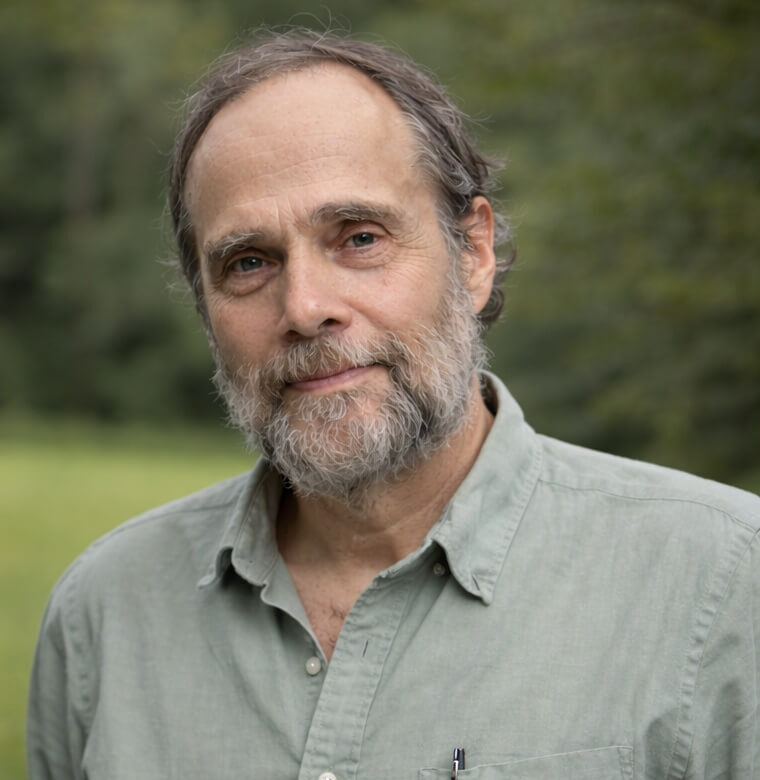
Paul M. Bingham
Paul M. Bingham earned his Ph.D. from Harvard University in Biochemistry and Molecular Biology, where he also continued to develop his fascination with fundamental unanswered questions about how humans evolved. During his 27-year career on the faculty of Stony Brook University, he has continued to explore human origins while also contributing to fundamental cell and molecular biology, including the discovery of the P element transposon and new approaches to cancer therapy.